
How to Optimise Kitchen Workflow Properly
A kitchen can look beautifully resolved on paper and still frustrate you every morning. The usual problem is not the finish selection or even the appliance brand. It is workflow. If you are asking how to optimise kitchen workflow, the real question is how people move, reach, prepare, cook, clean and put things away without constant interruption.
That sounds simple, but it is where many kitchens fail. A lot of layouts are still driven by cabinet runs, appliance marketing and what can be made quickly, rather than by how a household actually lives. Good kitchen design is not cabinet planning. It is the careful arrangement of space, storage and movement so the room works with you rather than against you.
How to optimise kitchen workflow starts with movement
The fastest way to judge a kitchen is to watch one meal being made from start to finish. You take food from the fridge, unload items onto the bench, rinse produce, reach for knives and utensils, move to the cooktop, then back to plating, serving and cleaning. In a poorly planned kitchen, those steps involve backtracking, blocked paths and unnecessary lifting.
A well-designed workflow reduces friction. It does not mean making everything compact. In some homes, especially larger family homes, overshrinking the layout creates crowding and traffic conflict. The aim is not the shortest possible distance between every point. It is the right relationship between tasks.
That is why the old work triangle still has value, but only as a starting point. Fridge, sink and cooktop need sensible spacing, yet modern kitchens do much more than support one cook standing in one spot. They often accommodate entertaining, school lunches, integrated appliances, hidden storage and multiple users at once. Workflow today is broader than a triangle.
Think in zones, not just appliances
The most effective answer to how to optimise kitchen workflow is zoning. Instead of viewing the kitchen as a line of cabinets, break it into practical working areas that reflect daily use.
A typical kitchen will include food storage, preparation, cooking, serving and clean-up. In many homes there is also a breakfast station, a baking zone or a section dedicated to kids' drink bottles and lunch containers. These zones should be arranged in a logical order. The fridge should support both grocery unloading and meal preparation. The sink should sit near prep space and dishwasher access. Crockery should be stored where it is easy to unload and easy to set the table.
This is where experienced design thinking matters. A generic showroom plan may place the dishwasher beside the sink and call it resolved. A proper design approach asks what opens at the same time, who stands where, whether the dishwasher blocks the bin pull-out, and whether the cupboard for everyday plates is on the wrong side of the room.
The prep zone deserves the best real estate
In most households, prep space does the hardest work. It is where groceries land, vegetables are chopped, school lunches are assembled, platters are arranged and appliances are used. Yet many kitchens leave only narrow strips of bench between sink and cooktop, then waste the most useful span on decoration.
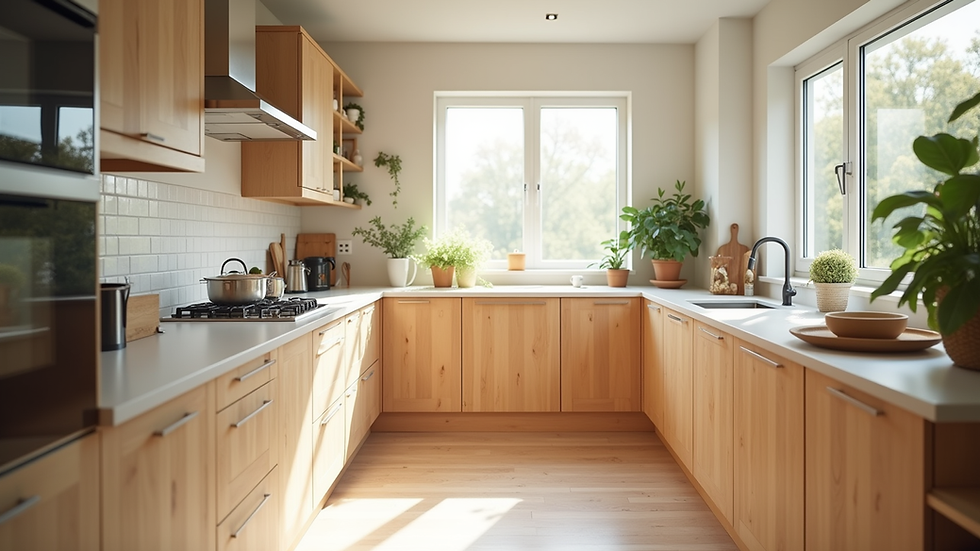
If you want better workflow, protect a generous, uninterrupted preparation area. For many homes, the ideal location is between sink and cooktop because it supports washing, chopping and transferring food to heat. That does not mean every kitchen should force those three elements into a tight run. It means the prep area should feel obvious and easy to use.
This zone also needs the right nearby storage. Knives, chopping boards, mixing bowls, oils, spices and waste disposal should all be within easy reach. If the bin is across the aisle, or the utensils are in a drawer behind someone unloading the dishwasher, the design is already working against you.
Storage should reduce effort, not just hide clutter
Many people assume more storage automatically means a better kitchen. It does not. Poorly located storage simply hides dysfunction behind more doors.
The right question is whether storage matches the task beside it. Pots and pans belong close to the cooktop. Everyday dishes should not require crossing the room from dishwasher to cupboard. Pantry items need to be visible and easy to retrieve. Small appliances should live where they are actually used, not wherever a cabinet happened to fit.
Deep drawers often outperform standard cupboards because they bring contents to you and reduce crouching. Internal fittings can help, but they are not magic. Too many accessory inserts add cost without improving use. Sometimes a well-sized drawer, properly positioned, is better than a complicated mechanism.
This is also where custom joinery outperforms off-the-shelf thinking. When storage is tailored to your household, workflow becomes calmer because each category of item has a logical place. That is very different from filling a catalogue of cabinet modules and hoping the result behaves like a kitchen.
How to optimise kitchen workflow in open-plan homes
Open-plan living creates a different set of pressures. The kitchen is no longer a separate workroom. It is part of the social and visual centre of the home. That can improve usability, but it also introduces traffic from other spaces, sightline considerations and pressure to make the island do everything.
An island can be excellent for workflow if it supports prep, serving and casual seating without creating conflict. It can also become an obstacle if it narrows circulation or forces people to walk around it every time they move between zones. Bigger is not always better. The proportions and clearances matter more than the statement.
In family homes, one of the most useful moves is separating primary cooking tasks from general household traffic. If the fridge is positioned where children can get drinks or snacks without entering the main cooking zone, the kitchen feels more composed. Likewise, a secondary sink or butler's pantry can be valuable, but only if the room is used often enough to justify the added footprint and cost.
Workflow fails when clearances are ignored
Beautiful drawings can hide practical problems. You only notice them once doors, drawers and appliances are open at the same time.
Adequate clearance between benches and islands is essential, but there is no single magic dimension. It depends on who uses the kitchen, the size of appliances, whether two people cook together and how circulation to adjoining rooms works. A narrow galley can be highly efficient for one cook and frustrating for a family of five.
Appliance doors need careful thought too. A wall oven placed opposite a dishwasher may be technically possible and still awkward in daily life. A fridge near a corner can limit door swing and make shelves unusable. These are not minor details. They shape how smooth or irritating the kitchen feels every day.
Lighting, power and ergonomics are part of workflow
Workflow is not only about layout. It also depends on whether the kitchen supports the body comfortably and allows tasks to happen where they should.
Poor lighting makes prep work harder and less safe. Power points in the wrong place force appliances into inconvenient corners. Bench heights that ignore the user can make long cooking sessions surprisingly tiring. Even tap selection matters if the sink is heavily used for filling pots, rinsing trays and washing produce.
There is always a balance to strike. A kitchen designed for visual restraint may hide appliances and power elegantly, but if access becomes cumbersome, everyday performance suffers. The best kitchens resolve both. They feel refined because the practical thinking is so well integrated that it disappears.
Why professional kitchen design changes the result
This is the point many renovators discover too late. A manufacturer can produce cabinets. A salesperson can price a package. A CAD operator can draw a neat arrangement. None of that guarantees a kitchen with excellent workflow.
To optimise kitchen workflow properly, you need someone who can read the architecture, understand the household, test the movement patterns and resolve the joinery in detail. That requires design judgement, not just product knowledge. It is also why homeowners who want more than a standardised outcome often seek specialist guidance from a studio such as 5 Rooms, where design quality and practical usability are treated as inseparable.
The best workflow solutions are rarely generic. A serious home cook may need wider prep surfaces and ingredient storage close at hand. A downsizer may prioritise easier access and reduced bending. A young family might need durable surfaces, landing zones for lunch prep and circulation that works even when three people are in the room before 8 am.
That is the real measure of success. Not whether the kitchen ticks a list of trends, but whether it quietly supports the rhythm of daily life. When the layout is right, cooking feels easier, cleaning is less disruptive and the room holds its composure even under pressure.
Before you commit to a layout, imagine a full ordinary day in the space - breakfast rush, grocery unpacking, dinner prep, dishwasher unloading, guests standing around the island. If the kitchen can handle those moments with clarity and ease, you are already much closer to getting it right.


Comments