
How to Plan a Kitchen Renovation Properly
The expensive mistakes in a kitchen renovation rarely start on site. They start much earlier - with a vague brief, a rushed layout, or the assumption that choosing cabinetry is the same as designing a kitchen. If you are working out how to plan a kitchen renovation, the first priority is not colours or appliances. It is clarity.
A well-planned kitchen has to do several jobs at once. It needs to function under pressure on busy mornings, accommodate storage properly, support the way your household actually cooks and lives, and still feel visually resolved as part of the home. That does not happen by selecting finishes in a showroom. It comes from good design thinking, tested against real use.
How to plan a kitchen renovation from the inside out
Most homeowners begin with reference images. That is understandable, but inspiration is only useful when it is filtered through your space, your architecture and your daily habits. A kitchen that looks impressive online may be completely wrong for your floor plan or the way your family moves through the room.
Start by defining what is not working in the current kitchen. Be specific. Is there too little bench space near the cooktop? Do drawers collide with the dishwasher? Is the pantry poorly located? Are overhead cupboards making the room feel heavy? This stage matters because a renovation should solve problems, not simply replace old finishes with new ones.
It is also the point where priorities need to be ranked. Some clients want better entertaining flow. Others need more practical storage, stronger connection to a living area, or improved natural light. Sometimes the kitchen needs to support a larger architectural change, such as an extension or reworked ground floor. The right plan depends on the real objective.
Write a brief before you look at products
A proper brief is one of the most overlooked parts of kitchen planning. It should capture how many people use the kitchen, how often you cook, whether you buy in bulk, what small appliances need permanent homes, and how formal or casual the space needs to feel.
This is also where you establish non-negotiables. That might be a generous island, integrated appliances, a butler's pantry, extra-tall storage, or a material palette that connects with existing timber flooring or joinery elsewhere in the house. Once these decisions are clear, design choices become much easier and far less reactive.
Budgeting for quality, not just quantity
When people ask how to plan a kitchen renovation, they often mean how much it will cost. That is reasonable, but budgeting should not be reduced to a cabinetry figure alone. A kitchen budget usually includes design, demolition, joinery, benchtops, splashbacks, appliances, plumbing, electrical, tiling, painting and, depending on the project, building works and project management.
The mistake is to allocate money based on assumptions rather than scope. A large kitchen with mediocre planning can offer less value than a smaller kitchen designed intelligently. Likewise, spending heavily on premium appliances while compromising joinery layout often leads to disappointment. You use the storage, bench space and workflow every day. That is where design quality earns its keep.
A realistic budget also needs contingency. Existing homes can reveal surprises once walls, floors or services are opened up. In Melbourne renovations especially, older properties can carry hidden complexity. Planning for that from the outset is simply prudent.
Layout comes before finishes
The layout is the engine of the kitchen. If the plan is weak, no stone, timber veneer or tapware selection will rescue it.
This is where specialist design makes a clear difference. A cabinet seller may be able to price units quickly, but speed is not the same as resolution. Good kitchen design considers circulation, working zones, door and drawer clearances, appliance integration, sightlines, proportions, ergonomics and the relationship between the kitchen and adjoining rooms.
The right layout depends on the room, not a formula
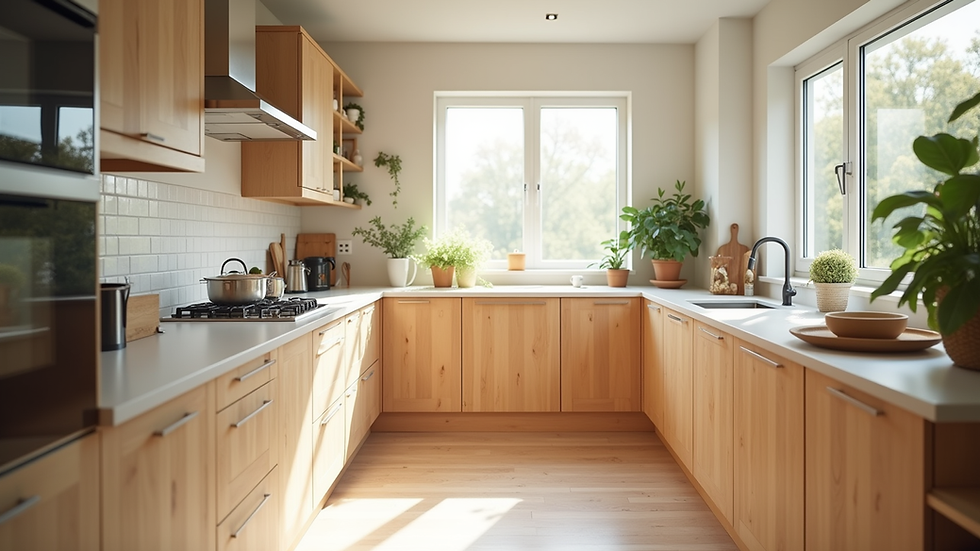
There is no universal best layout. U-shaped kitchens, galley kitchens, single-wall kitchens and island kitchens can all work brilliantly or poorly depending on the architecture. The question is not which layout is fashionable. It is which layout makes the room function with the least friction.
For one household, an island may improve preparation space and social connection. For another, it may interrupt movement and create pinch points. A butler's pantry can be enormously useful, but only when it is sized and positioned properly. Otherwise it becomes a costly add-on that steals space from the main kitchen.
A strong design process tests these trade-offs early. That is far better than discovering after installation that the fridge door blocks a walkway or the bin pull-out is nowhere near the sink.
Plan storage with more discipline than you think you need
Storage is where many renovations drift into guesswork. Clients often say they want more storage, but quantity alone is not the issue. The real question is what needs to be stored, where it should sit, and how easily it should be accessed.
Deep drawers usually outperform standard cupboards for many kitchen items because they make contents visible and easier to reach. Pantry storage should suit the way you shop. Overhead cabinetry can be useful, but not if it overloads the room visually or creates awkward access. Integrated bins, tray storage, spice drawers, appliance cupboards and internal organisers all have value when they are designed with purpose.
This is one of the clearest differences between generic planning and proper design. Storage should support behaviour, not just fill walls with cabinetry.
Materials and finishes need both style and staying power
A kitchen has to look right, but it also has to wear well. That sounds obvious, yet many finish selections are made on appearance alone.
Cabinet finishes, benchtop materials and handles should be chosen in the context of the whole home, the amount of natural light, expected wear, and the level of maintenance you are comfortable with. Matte finishes can look beautifully refined but may mark more readily in some applications. Certain stone surfaces create a dramatic statement but may not suit every family kitchen. Timber adds warmth, though it needs careful balancing so the room does not become visually heavy.
The best kitchens are not simply fashionable. They are proportioned and detailed well enough to remain convincing long after current trends have moved on.
Appliances, lighting and power should be decided early
Appliance choices affect cabinetry dimensions, clearances, ventilation requirements and workflow. They are not finishing touches. If you leave them too late, the design often has to bend around late-stage decisions.
Think carefully about what you genuinely need. A larger cooktop, double ovens or an integrated fridge can be worthwhile, but only if they suit how you cook and the scale of the room. There is little value in specifying impressive appliances if they compromise bench space or circulation.
Lighting deserves the same level of attention. A kitchen should have layered lighting: functional task lighting, ambient light and, where appropriate, feature lighting that enhances the room. Power points also need forethought. Their location should support small appliances without cluttering splashbacks or interrupting clean lines unnecessarily.
Coordination is where many projects succeed or fail
Even a strong design can be diluted by poor coordination. Renovations involve trades, suppliers, lead times, measurements and sequencing. When those elements are handled casually, delays and compromises follow.
That is why the planning stage should include realistic timing, documentation and a clear understanding of who is responsible for what. If your project includes structural changes, new windows, flooring transitions or bespoke joinery beyond the kitchen itself, coordination becomes even more critical.
For clients who want a higher level of control over design quality and execution, working with a specialist studio such as 5 Rooms can close the gap between concept and outcome. That matters because kitchens are rarely standalone purchases. They are integrated interior projects with technical, aesthetic and practical consequences.
How to plan a kitchen renovation without losing sight of the whole home
The best kitchen renovations improve more than the kitchen. They strengthen the way the home works overall. They align with the architecture, respond to natural light, and create a more coherent experience between cooking, dining and living spaces.
That broader view is often what separates a merely new kitchen from one that genuinely elevates the house. The details matter, but so does the bigger picture. A kitchen should not feel like a showroom insert dropped into an unrelated room. It should belong.
Before you commit to cabinetry, finishes or appliance packages, make sure the thinking underneath them is sound. A renovation planned with care will always outperform one assembled in haste. The smartest place to invest first is not in product. It is in design judgment.



Comments