
What Makes a Good Kitchen Layout?
A kitchen can look expensive, beautifully finished and perfectly on trend, yet still frustrate the people who use it every day. The problem is usually not the cabinetry colour or the stone selection. It is the layout. If you are asking what makes a good kitchen layout, the answer starts with a hard truth - good kitchens are not created by arranging cabinets on a plan. They are designed around movement, priorities, architecture and the way a household actually lives.
That distinction matters more than most homeowners realise. In the renovation market, many layouts are still driven by what is easy to quote, easy to manufacture or easy to sell. A truly successful kitchen layout comes from design thinking first. It has to resolve function, proportion, appliance integration, storage planning and visual calm at the same time.
What makes a good kitchen layout in practice
A good kitchen layout allows ordinary tasks to happen without friction. You should be able to unpack groceries without blocking circulation, prepare food without fighting for bench space, open the dishwasher without trapping someone at the sink, and move between cooking, cleaning and storage in a way that feels natural.
That sounds obvious, but it is where many kitchens fail. Homeowners are often shown a neat floor plan with an island and a tall pantry wall, but nobody has properly tested how the room behaves once doors swing open, stools are occupied, appliances are running and multiple people are moving through the space.
A strong layout is measured less by how it looks on paper and more by how it performs under daily pressure. Morning traffic, school lunches, entertaining, cleaning up, charging devices, temporary clutter and long cooking sessions all expose weak planning very quickly.
The first priority is workflow, not cabinetry
The classic working triangle still has value, but only as a loose principle. Sink, cooktop and fridge should relate sensibly to one another, yet modern kitchens need a more detailed reading than old formulas allow. Households use kitchens differently now. There are coffee stations, integrated bins, larger refrigerators, double ovens, butler's pantries, appliance cupboards and open-plan living zones all competing for space.
Good workflow means the main tasks are supported in the right sequence. Food comes in, gets stored, is prepared, cooked, served and cleaned up. The layout should support that chain without unnecessary crossing back and forth. The fridge should be accessible without disrupting the main cooking area. The sink should have meaningful bench space beside it. The cooktop needs landing space, not just decorative stone.
This is where specialist design matters. Cabinet planning can produce a kitchen that technically fits. Design produces one that actually works.
Space around you matters as much as the units
One of the clearest signs of a poor kitchen layout is cramped circulation. People tend to focus on whether an island fits, rather than whether it should be there at all. An island that narrows walkways, creates pinch points or forces awkward detours is not adding value, no matter how desirable it seemed in the showroom.
Clearances need to suit real use, not minimum tolerances. You need room to open drawers fully, unload appliances comfortably and pass through without constant negotiation. In family homes, this becomes even more important because kitchens are rarely single-user spaces.
The best layouts also recognise adjacent rooms. A kitchen does not exist in isolation. It connects to dining, living, outdoor areas, hallways and sometimes laundry or mudroom functions. A layout should improve the flow of the whole home, not just the efficiency of one wall of joinery.
Storage should be planned by use, not by volume
Homeowners often say they want more storage. Usually, what they really need is better storage. A kitchen packed with cupboards can still be inconvenient if everyday items are in the wrong places, overhead cabinets are too high, pantry shelving is too deep, or drawers are divided poorly.
Good kitchen layouts place storage where it is needed. Crockery near the dishwasher. Pots near the cooktop. Food storage near the preparation zone. Rubbish and recycling near the sink and prep area. Glassware where serving makes sense. This sounds simple, yet it is frequently ignored when kitchens are designed around symmetry or standard cabinet modules.
There is also a trade-off to manage. More storage is not always better if it compromises bench space, light or proportions. In some kitchens, deleting an overhead cupboard and gaining visual relief is the right move. In others, a full-height pantry wall is essential. The right answer depends on the room, the architecture and the household.
Bench space is where the kitchen earns its keep
One generous, uninterrupted preparation surface is worth far more than scattered leftover strips of benchtop. A good layout protects usable bench space in the zones where real work happens. That usually means between sink and cooktop, or adjacent to a major prep area.
This is another point where appearance can mislead. A kitchen may have a long benchtop overall, but if it is chopped up by sinks, small appliances and decorative features, it may offer very little practical work area. Likewise, an oversized island is not automatically useful if it sits too far from the sink or cooktop to support preparation.
When planning benchtops, think beyond cooking. Where do groceries land? Where do school bags end up? Where do guests naturally gather? In many homes, the kitchen is doing the work of several rooms. The layout needs to acknowledge that honestly.
Light, outlook and proportion are part of the layout
A good kitchen layout is not just ergonomic. It is also spatially composed. Where you stand most often should ideally have access to natural light or a decent outlook. Tall elements should be placed carefully so they do not make the room feel top-heavy or block light unnecessarily. Islands should suit the scale of the room rather than dominate it.
This is where experienced design separates itself from generic planning. Kitchens need visual balance. The relationship between solid joinery, open space, glazing and circulation has a major impact on how refined the room feels. A layout can be technically functional and still feel oppressive if proportions are wrong.
In Melbourne homes, this often becomes relevant when opening up older floor plans or connecting to new extensions. The kitchen has to belong to the architecture. It should not feel like a catalogue arrangement dropped into the middle of the house.
What makes a good kitchen layout for different households
There is no single best kitchen layout because households are not all the same. A retired couple may prioritise ease of movement, integrated appliances and a calmer visual result. A family with teenagers may need multiple access points, generous refrigeration and a tougher approach to everyday clutter. A keen cook may sacrifice some decorative open shelving in favour of serious prep space and better pantry organisation.
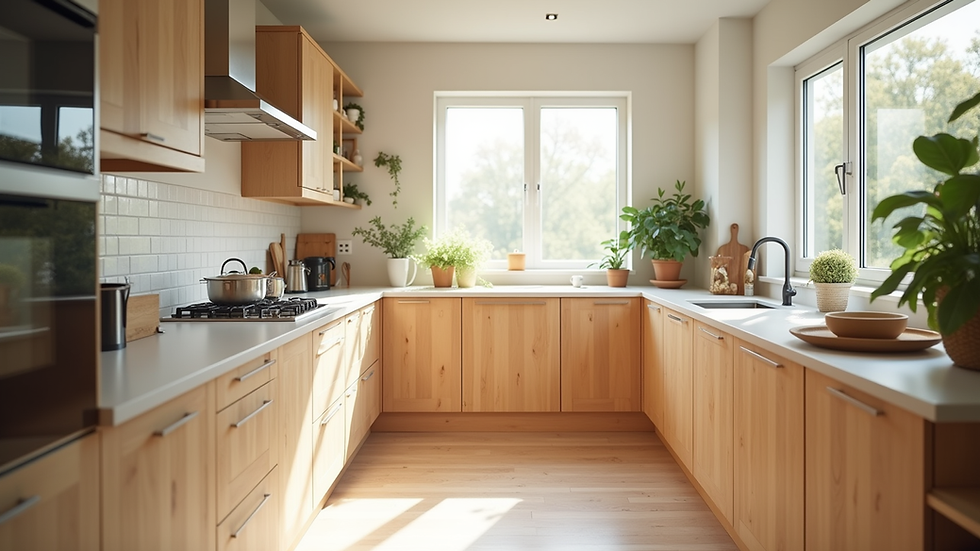
Even common layout types - galley, L-shaped, U-shaped, island or peninsula - only work when adapted properly. A galley kitchen can be exceptionally efficient in the right footprint. An island kitchen can be excellent in a wider open-plan room. A peninsula can solve planning issues where a full island would create congestion. The format is not the answer by itself. The detailing and spatial judgement are what determine success.
The biggest mistakes usually come from false priorities
Many poor kitchen layouts result from putting the wrong thing first. Sometimes it is resale mythology, such as insisting on an island at all costs. Sometimes it is appliance wish lists that crowd the room. Sometimes it is overcommitting to a style image without considering how the kitchen will age in daily use.
Another common mistake is treating the kitchen as a joinery package rather than a designed environment. Once that happens, decisions become cabinet-led instead of space-led. You end up with filler panels, awkward corner solutions, token seating and storage that looks generous but performs poorly.
The better approach is to begin with how the room should function, then build the joinery around that logic. Materials and detailing matter enormously, but they should sit on top of a well-resolved plan.
Why expert design changes the outcome
When homeowners invest properly in a kitchen, they are not just buying cabinets and benchtops. They are shaping one of the hardest-working spaces in the home. That process deserves more than sales advice or basic drafting. It requires judgement, experience and a detailed understanding of how design, manufacture and everyday living intersect.
This is exactly why specialist studios such as 5 Rooms approach kitchens differently. The goal is not simply to fill a room with joinery, but to create a layout that is logical, elegant and genuinely suited to the household.
If you are planning a renovation, ask harder questions early. Not just what it will look like, but how it will move, where things will go, what will happen on busy mornings and whether the room will still feel right in five or ten years. A good kitchen layout should make daily life feel easier without drawing attention to itself. When that happens, the design is doing its job properly.


Comments