
A Guide to Kitchen Zoning Principles
A kitchen can look impressive on paper and still fail the moment real life starts. The bins are too far from the prep area, the dishwasher door blocks circulation, and the pantry somehow ends up nowhere near where groceries are unpacked. This is exactly why a guide to kitchen zoning principles matters. Good kitchens are not built from cabinets first. They are built from movement, use and careful spatial thinking.
Zoning is one of the clearest differences between true kitchen design and simple cabinet planning. It is the discipline of organising the room into related task areas so the kitchen supports the way a household actually lives. When zoning is resolved properly, the room feels easier, calmer and more intuitive. You stop noticing the effort involved in cooking, cleaning and putting things away because the layout has already done much of the work for you.
What kitchen zoning really means
At its core, zoning is about placing functions in the right relationship to one another. Most kitchens need some version of storage, preparation, cooking and cleaning zones. Larger kitchens may also include serving, breakfast, appliance, bar or homework zones. The point is not to force every project into a rigid formula. The point is to create purposeful adjacencies.
This is where many off-the-shelf kitchen layouts fall short. They may tick a list of components, but they do not always consider how the room operates minute by minute. A well-zoned kitchen thinks about where groceries enter, where produce is washed, where chopping happens, where hot items land, and where dishes are stacked after the dishwasher cycle. These are small moments, but they define whether a kitchen is genuinely functional.
A guide to kitchen zoning principles starts with behaviour
Before choosing finishes, profiles or appliance brands, the first question should be how the household uses the room. A family with young children will move through the kitchen differently from a couple who entertain often. A serious home cook needs a different prep and cooking relationship from someone who relies on quick weekday meals. Open-plan living also changes the brief, because the kitchen is rarely an isolated workspace now. It is part of the social life of the home.
That means zoning should respond to habits, not trends. If breakfast is rushed every weekday, there should be a practical place for cereals, toaster access and school lunch preparation. If bulk shopping is common, pantry capacity and unloading flow become more important. If one person cooks while another clears, the circulation needs to support two users without friction.
This behavioural layer is where experienced design earns its value. Anyone can place cabinets along a wall. Fewer can read a household pattern and translate it into an efficient physical arrangement.
The essential kitchen zones
Storage zone
The storage zone usually includes pantry items, dry goods, everyday crockery, glasses and often refrigeration. The best location depends on the shape of the room, but storage should support both arrival and use. Groceries need a logical path from entry point to pantry and fridge. Everyday items should sit close to where they are needed, not in a distant bank of cabinetry that looks neat but adds steps every day.
Tall storage can be extremely effective, though it must be handled carefully. Too many tall units clustered together can make a kitchen feel heavy and reduce access to benchtop workspace. The balance between volume and openness matters.
Preparation zone
The preparation zone is the true working heart of most kitchens. It needs uninterrupted bench space, easy access to knives, utensils, chopping boards, waste disposal and often the sink. This is one of the most common design failures in generic layouts - the prep area is broken into fragments by a cooktop, sink or decorative decisions that reduce usable surface.
In practical terms, generous clear bench space between the sink and cooktop is often ideal. That relationship supports washing, trimming, chopping and staging ingredients in a compact sequence. The exact distance depends on the room, but the principle remains the same: prep wants continuity.
Cooking zone
The cooking zone centres on the cooktop and oven, with support from pots, pans, oils, spices and heat-resistant landing space. It should feel contained without being cramped. One of the biggest mistakes is isolating the cooktop from nearby bench area. If there is nowhere sensible to place hot trays, utensils or ingredients, the zone is incomplete no matter how expensive the appliances are.
Overhead extraction, splashback design and surrounding storage all affect how this zone performs. In some homes, a separate oven stack works better than placing everything in one line. It depends on cooking style, ergonomics and the broader composition of the room.
Cleaning zone
The cleaning zone typically includes the sink, dishwasher, bins and dish storage. This area should support both food prep and post-meal clean-up. The sink often serves more than one function, so its position needs real thought. If it is too isolated, cleaning becomes inefficient. If it occupies the only good prep bench, the whole kitchen suffers.
Dishwasher placement is particularly important. It should allow easy loading from the sink and easy unloading into nearby drawers or cupboards. This sounds obvious, yet many kitchens still place the dishwasher in a way that blocks walkways or forces awkward reaching.
Guide to kitchen zoning principles for different layouts
A galley kitchen benefits from very disciplined zoning because space is tighter and movement is linear. In this type of room, it is critical to avoid overlap between zones that creates bottlenecks. Parallel benches can work brilliantly if one side supports prep and cleaning while the other supports cooking and storage, but the spacing has to be right.
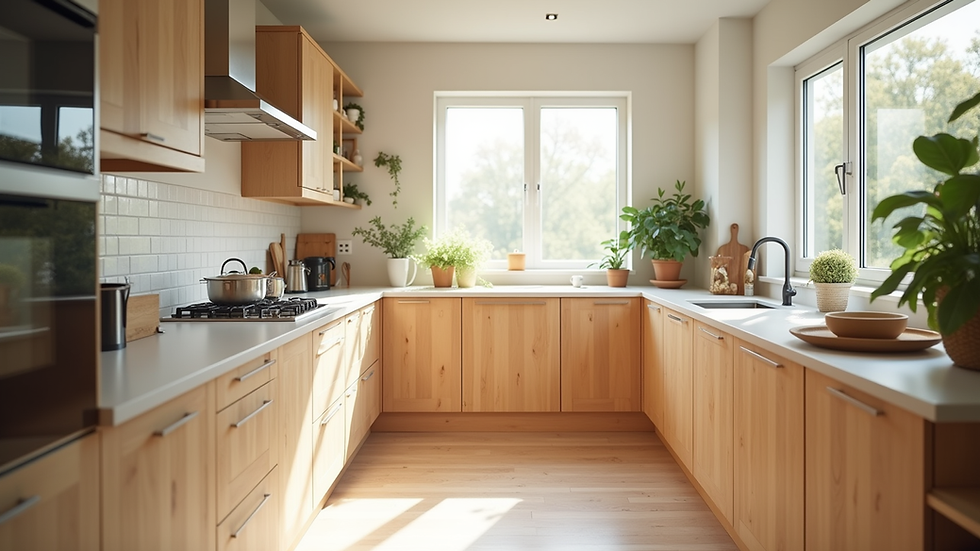
An L-shaped kitchen often allows a natural spread of functions, though corner planning becomes important. Corners should not become dead space that interrupts workflow. The room should still provide a clear prep area rather than scattering tasks around the perimeter.
Island kitchens offer strong zoning opportunities, but they are also easy to overcomplicate. An island should earn its place. Sometimes it is best used as a prep and social zone with the main cooking and cleaning functions on the wall run. In other cases, housing the sink or cooktop in the island makes sense. The right answer depends on sightlines, extraction, seating, circulation and how much visual mess the household is willing to tolerate.
Open-plan kitchens need especially careful zoning because they are doing double duty. They must function as workspaces while presenting well to adjoining living and dining areas. That often means considering back kitchens, appliance cupboards or secondary storage zones to keep visible areas calm without sacrificing usability.
What often goes wrong
The most common zoning problem is designing from the cabinetry outward instead of from the user inward. When the focus is only on fitting in maximum storage or following a showroom formula, practical relationships are lost.
Another issue is overreliance on the old work triangle idea. The triangle between sink, cooktop and fridge still has some value, but modern kitchens are more complex than that. They now accommodate multiple users, integrated appliances, open-plan living and a wider range of tasks. Zoning is a more useful way to think because it reflects contemporary use rather than a simplified diagram.
There is also a temptation to prioritise symmetry over performance. Symmetry can be visually satisfying, but not if it compromises bench space, storage logic or appliance access. A strong kitchen often looks composed because the planning is intelligent, not because every elevation is mirrored.
Why professional design makes the difference
This is where specialist knowledge matters. Kitchen zoning is not just a matter of placing appliances in sensible positions. It involves understanding joinery depth, appliance clearances, human movement, storage behaviour, family routines and the visual weight of the room as a whole. It is both technical and aesthetic.
For Melbourne homeowners investing in a renovation or new build, this matters because poor decisions are expensive to fix once cabinetry is manufactured. A boutique design studio such as 5 Rooms approaches zoning as part of a complete spatial resolution, not as an afterthought attached to cabinet selection. That distinction shows up in daily use.
The best kitchens do not shout about their intelligence. They simply feel right. Groceries have a logical home. Prep is comfortable. Cooking has support space. Cleaning does not interrupt the room. The design quietly removes friction.
If you are planning a kitchen, treat zoning as the foundation rather than a finishing touch. Materials, colours and detailing should absolutely be considered, but they perform best when the underlying layout is resolved with care. A beautiful kitchen should not ask you to work around it. It should work beautifully around you.



Comments