
Joinery Design for Small Spaces That Works
A narrow kitchen that feels crowded, a laundry with nowhere for the broom, a wardrobe that looks generous on plan but fails in daily use - this is exactly where joinery design for small spaces proves its value. In compact homes, apartments and renovated period houses, every millimetre matters. The difference is rarely about adding more cabinets. It is about designing the right storage, in the right place, at the right depth, with a clear understanding of how the room is actually used.
Many small-space problems are made worse by a common industry shortcut. Cabinet planning is treated as design. It is not. A wall of cupboards may increase volume on paper, yet still leave a room awkward, heavy and inefficient. Good joinery design resolves circulation, sightlines, proportions, ergonomics, light, appliance integration and the practical routines of the household. In a smaller home, those decisions are more exposed and more consequential.
Why joinery design for small spaces is different
A large room can absorb mediocre decisions. A small room cannot. If a pantry door clashes with a dishwasher, if a vanity is too deep, if overhead cupboards lower the visual height of a room, the compromise is felt every day.
That is why compact interiors demand a higher level of design judgement. The brief is not simply to fit in as much as possible. In fact, maximising storage can be the wrong objective if it damages movement, natural light or bench space. Sometimes the better solution is fewer cabinets, better organised internally, with stronger proportions and more generous clearances.
This is particularly relevant in Melbourne homes where room sizes vary widely. A Victorian terrace, a 1980s unit and a new apartment all have different constraints. Ceiling heights, wall thicknesses, existing services and natural light conditions influence the right joinery response. There is no standard package that solves these variables well.
Start with use, not cabinetry
The most successful small-space joinery begins with behaviour. How do you cook? What needs to be concealed and what should remain accessible? Do two people use the bathroom at once? Does the laundry also need to function as a mudroom, linen store or pet zone? Without those answers, joinery becomes guesswork.
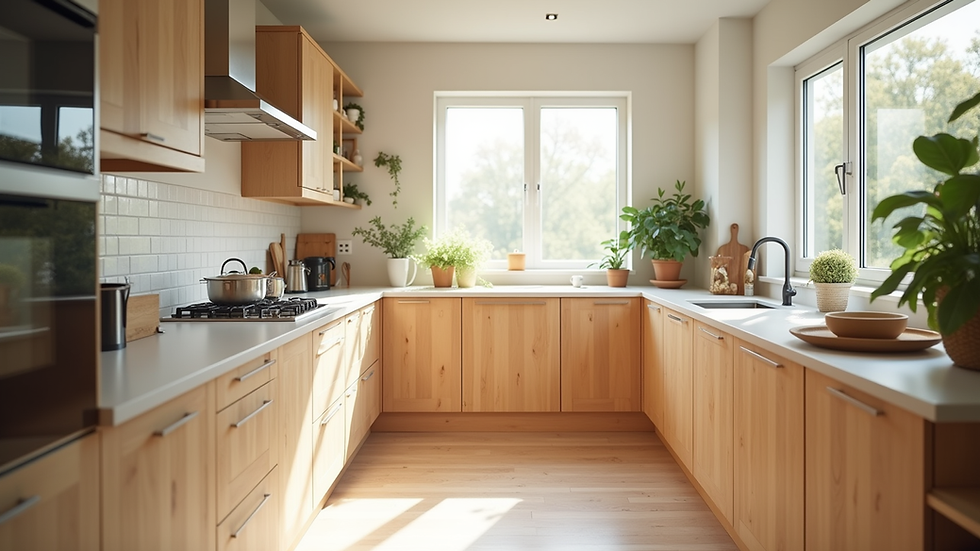
In kitchens, for example, clients often ask for more pantry storage when the deeper issue is poor zoning. Everyday items are too far from the preparation area, benchtops are crowded by small appliances, and rubbish or recycling has no allocated space. A well-designed compact kitchen often works better because the storage is more specific. Drawers replace hard-to-reach cupboards, appliances are integrated more carefully, and the visual mass of the room is controlled.
The same principle applies in wardrobes and bathrooms. Hanging length, shelf spacing, drawer widths and internal accessories should reflect the wardrobe contents, not a generic module. In bathrooms, vanity joinery must consider plumbing, cleaning access, mirror placement and circulation around the room. Small spaces reward accuracy.
The role of proportion in compact rooms
One of the least understood parts of joinery design is proportion. Homeowners are often shown layouts that technically fit, but feel bulky once built. That usually comes down to scale and balance rather than storage volume alone.
Depth is a good example. Not every cabinet needs to be standard depth. In living areas, entry zones and some laundries, a shallower cabinet can dramatically improve movement while still offering useful storage. In kitchens, a reduced-depth section may allow a more comfortable walkway or create a better alignment with adjacent architecture. In bathrooms, an oversized vanity can dominate a narrow room and make daily use irritating.
Height matters too. Taking joinery to the ceiling can be excellent in some spaces, especially where visual simplicity is the aim and dust-catching gaps are undesirable. But it is not always the right move. Full-height cabinetry can make a low or dark room feel heavier if material selection, shadow lines and surrounding surfaces are not handled properly. The answer depends on the room, the architecture and the intended visual effect.
Storage should feel calm, not crowded
A room with excellent storage can still feel cluttered if the joinery reads as visually busy. Too many panel lines, uneven door sizes, open shelving in the wrong place or inconsistent alignments quickly create noise.
In smaller interiors, restraint usually performs better. Cleaner elevations, disciplined material use and carefully integrated handles or finger pulls can make a compact room feel more spacious. This is not about minimalism for its own sake. It is about reducing visual interruption so the room feels resolved rather than overworked.
What custom joinery solves that standard solutions do not
Off-the-shelf systems and showroom packages have their place, but they are inherently limited in small or irregular spaces. They rely on set modules, predictable room dimensions and broad assumptions about use. That approach can be adequate in a spare bedroom. It is far less convincing in a kitchen renovation, a compact ensuite or a multifunctional laundry where every decision has to work harder.
Custom joinery allows the design to respond to real conditions. Bulkheads can be used deliberately rather than as an afterthought. Awkward recesses can become practical storage. Appliances can be integrated properly. A study nook can be absorbed into living room joinery rather than appearing as an unrelated add-on.
More importantly, custom work allows trade-offs to be made intelligently. You may choose to sacrifice one overhead cupboard in favour of better natural light. You may reduce pantry depth to achieve a more comfortable island clearance. You may combine seating, display and concealed storage into one wall so the room does not feel broken into pieces. These are design decisions, not manufacturing decisions.
Small-space joinery needs technical discipline
Compact rooms leave little room for construction error or vague thinking. Door swings, appliance clearances, power points, ventilation, lighting and material tolerances all need to be resolved early.
This is where many projects drift off course. A plan can look fine in CAD and still perform poorly in reality if the designer lacks deep spatial understanding. A beautiful elevation does not guarantee usable drawers. Likewise, adding clever hardware is not a substitute for a strong layout. The fundamentals still matter most.
An experienced joinery designer looks beyond the cabinet carcass. They consider how a room will be entered, where the eye lands first, how a benchtop edge aligns with a window, whether the overheads feel oppressive, and how the joinery connects with flooring, wall finishes and adjacent spaces. In a boutique design-led studio such as 5 Rooms, that level of thinking is not an optional extra. It is the work.
Material selection changes how space is perceived
Colour, texture and reflectivity all influence whether joinery helps a room feel larger or more compressed. Lighter finishes can lift a compact room, but that does not mean every small space should be white. Contrast can be effective when used with control. Timber veneer can add warmth and depth. Matte finishes may soften visual glare. Even a darker palette can work beautifully if the room has strong natural light and the composition is balanced.
The point is not to follow a rule of thumb. It is to understand the visual weight of materials and how they interact with room size, light and detailing. Handle choice, shadow gaps, benchtop thickness and grain direction can all subtly alter the perception of scale.
Where homeowners often get it wrong
The most common mistake is asking for more before defining what matters. More cupboards, more shelving, more drawers. Quantity sounds practical, but in smaller rooms it often creates a harder, tighter environment with little improvement in usability.
Another mistake is treating each room in isolation. A small home works best when joinery decisions are coordinated. Storage pressure in the kitchen might be relieved by better dining joinery. A hallway cupboard might remove the need for oversized laundry cabinetry. A bedroom wall may be able to absorb a study function if designed properly. Looking at rooms separately can produce duplication and wasted volume.
There is also a tendency to underestimate aesthetics in practical rooms. Clients sometimes assume laundries, robes and secondary bathrooms should be dealt with more simply. Yet in a compact home, these spaces contribute heavily to the overall sense of order. If they are poorly planned, the entire house feels less resolved.
The best results come from clarity early
If you are planning a renovation or new build with limited floor area, the right time to think seriously about joinery is not after architectural plans are locked in. Joinery affects walls, windows, services, lighting, circulation and how space is perceived. When it is considered early, the design can become part of the architecture rather than something squeezed into it later.
That does not mean every project needs extravagance. It means compact rooms deserve proper design attention. With the right expertise, a small kitchen can feel calm and highly efficient, a narrow laundry can become genuinely useful, and a modest living room can carry far more function without looking burdened.
The real measure of joinery design for small spaces is not how much it holds. It is how naturally the room supports daily life while still looking considered, refined and easy to live with. When that balance is achieved, a compact home stops feeling like a compromise.



Comments